
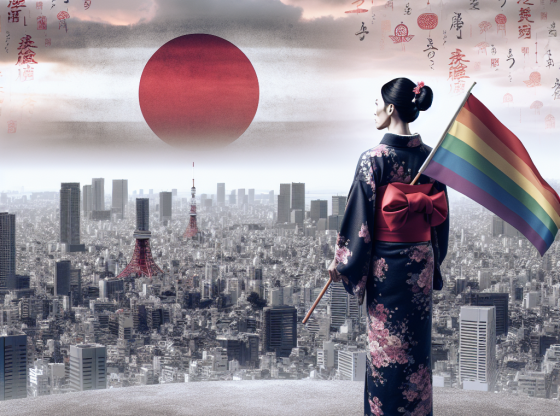
The Allure of Identity: Japan’s Controversial Ruling on Transgender Rights explores the complex interplay between cultural identity, legal frameworks, and individual rights in Japan. As societal attitudes towards gender and sexuality evolve globally, Japan faces a critical moment in its approach to transgender rights. This ruling not only reflects the ongoing struggle for recognition and equality within Japanese society but also highlights the tensions between traditional values and modern human rights perspectives. By examining the implications of this landmark decision, the discussion sheds light on the broader challenges faced by transgender individuals in navigating their identities in a rapidly changing world.
Legal Landscape: Understanding Japan’s Transgender Rights Ruling
In the heart of Japan, where tradition intertwines with modernity, a significant legal ruling has emerged that captures the essence of identity and self-expression. The landscape of transgender rights in Japan has been shaped by cultural nuances and historical complexities, creating a tapestry rich with both promise and challenge. Recently, the Japanese Supreme Court made headlines with its decision regarding the legal recognition of gender identity for transgender individuals. This ruling serves as a poignant reflection of society’s evolving understanding of gender, yet it also reveals the deep-rooted tensions that persist.
At the core of this ruling lies the question of personal identity—a theme as old as time itself. For many transgender individuals, their journey toward self-recognition is not merely about changing names or documents; it is an intimate quest for authenticity. The court’s decision to uphold certain requirements for legal gender change—such as sterilization—has sparked heated debates across the nation. Critics argue that such stipulations undermine the very essence of what it means to be true to oneself. In contrast, proponents assert that these measures are necessary to maintain societal norms. Thus, the dialogue surrounding this ruling becomes more than just a legal matter; it evolves into a discussion about humanity, dignity, and the right to exist as one truly is.
As we delve deeper into the implications of this ruling, it becomes evident that Japan stands at a crossroads. On one hand, there is an undeniable desire among many citizens for progress and acceptance. Activists have tirelessly fought for reforms, advocating for a more inclusive society where all forms of identity can flourish without fear or discrimination. On the other hand, traditional values still hold sway over public sentiment, influencing perceptions of gender and sexuality. This juxtaposition creates a complex environment where love and acceptance must navigate through the shadows of conservatism.
Moreover, the ruling reflects broader societal attitudes towards LGBTQ+ issues within Japan. While major cities like Tokyo embrace diversity and vibrancy, rural areas may cling to conventional beliefs, illustrating the dichotomy of urban versus rural perspectives on gender identity. As conversations about transgender rights gain momentum, they often reveal underlying fears and misunderstandings that inhibit growth. Yet, amidst these challenges, there is hope. Grassroots movements continue to rise, fostering a sense of community among those who feel marginalized. These collective voices resonate with a yearning for acknowledgment and respect, bridging gaps between generations and ideologies.
The allure of identity in this context transcends mere legality; it embodies the spirit of resilience. Each story shared, each voice raised contributes to a growing narrative that champions individual rights and celebrates diversity. While the path forward may be fraught with obstacles, the commitment to fostering understanding remains unwavering. As Japan navigates its legal landscape concerning transgender rights, it embarks on a journey not only toward reform but also toward healing.
Ultimately, the recent ruling serves as a catalyst for deeper reflections on identity, urging society to confront its biases while embracing the beauty found in differences. It calls upon all individuals to recognize that every person’s experience is valid and deserving of respect. In doing so, Japan can transform its legal framework into one that not only acknowledges the complexity of gender but also honors the profound human spirit that yearns for connection and belonging. Through this lens, the allure of identity shines brightly, illuminating paths toward a more inclusive future.
Cultural Perspectives: The Social Implications of Gender Identity in Japan

In the heart of Japan, where ancient traditions intertwine with modern aspirations, the discourse surrounding gender identity unfolds like a delicate cherry blossom in spring. The cultural landscape of this island nation is rich and complex, shaped by historical narratives that both honor and challenge notions of identity. As society grapples with evolving perspectives on transgender rights, it becomes evident that these discussions are not merely legal or political but deeply rooted in the fabric of Japanese culture itself.
At the core of this dialogue lies a profound respect for harmony, or “wa,” which has traditionally guided interpersonal relationships and societal norms. This value often manifests in an unspoken pressure to conform to established gender roles, creating a tension between personal identity and collective expectations. For many transgender individuals, navigating this intricate web of social dynamics can be daunting. They find themselves at a crossroads, torn between their authentic selves and the culturally ingrained desire for acceptance. Consequently, the recent ruling on transgender rights ignites a flame of hope while simultaneously casting shadows of uncertainty across the landscape of social interaction.
Moreover, Japan’s long-standing relationship with gender fluidity adds another layer to this conversation. Historical figures such as the kabuki actors, who blurred the lines between masculinity and femininity, remind us that gender expression has always existed beyond rigid binaries. These cultural touchstones evoke a sense of nostalgia and admiration, inviting contemporary society to re-evaluate its perceptions of gender identity. Yet, despite these artistic representations, the reality for many transgender individuals remains fraught with challenges. The struggle for recognition and legitimacy in a society that values conformity raises questions about how far we have come and how much further we must go.
Transitioning from one’s assigned gender to their true self is not merely a personal journey; it is also a public declaration that reverberates through familial structures and community ties. In Japan, where family bonds hold significant weight, the implications of gender identity can lead to friction within households steeped in tradition. Parents may grapple with understanding their child’s experiences, caught between love and societal expectations. This poignant intersection of personal truth and familial obligation highlights the need for compassion and dialogue, urging society to embrace a more inclusive narrative.
As conversations around transgender rights gain momentum, they challenge prevailing notions of masculinity and femininity, encouraging a broader understanding of what it means to exist authentically in one’s skin. Activists advocate for greater visibility and representation, striving to create spaces where diverse identities can flourish without fear of stigma or discrimination. In doing so, they illuminate the path toward a future where acceptance transcends mere tolerance—a future where every individual, regardless of gender identity, is celebrated for their unique contributions to the tapestry of life.
Ultimately, the allure of identity in Japan beckons society to reflect upon its values and beliefs. It calls for a romantic reimagining of human connection—one that embraces complexity rather than shunning it. As the nation stands at this pivotal moment, the potential for transformation lies not only in legal rulings but also in the hearts and minds of its people. By fostering empathy and understanding, Japan can weave a richer narrative that honors all identities, allowing each person to bloom into their full brilliance amidst the vibrant backdrop of cultural heritage.
Personal Narratives: Voices from the Transgender Community in Japan
In the heart of Japan, where tradition intertwines with modernity, personal narratives from the transgender community reveal a tapestry of resilience, struggle, and hope. Each story is a thread that contributes to a larger fabric, illustrating the complexities of identity in a society often torn between its rich cultural heritage and the evolving norms of individual expression. For many transgender individuals in Japan, the journey towards self-acceptance is fraught with challenges, yet it is also illuminated by moments of profound beauty and connection.
Take, for instance, the story of Haruki, who grew up in a small town surrounded by cherry blossoms. From an early age, Haruki felt a dissonance between his inner self and the expectations imposed by society. The delicate petals of sakura became a symbol of his yearning for transformation; just as they bloom each spring, he dreamed of shedding his past and embracing his true identity. Through years of introspection and courage, Haruki’s narrative unfolds like the blossoming flowers—each petal representing a milestone in his journey toward authenticity. His experience resonates deeply within the community, sparking conversations about acceptance and understanding in a country where traditional gender roles still hold sway.
Similarly, Yumi’s voice echoes through the corridors of Tokyo, where neon lights illuminate both dreams and despair. A dancer at heart, Yumi found solace in movement, using her art to express emotions that words often failed to capture. Her performance became a metaphor for her life—a dance of defiance against societal constraints. Yet, beneath the vibrant exterior lay a labyrinth of fear and uncertainty. Yumi navigated the complexities of transitioning while confronting discrimination and misunderstanding. Nevertheless, she emerged stronger, embodying grace in every step she took, inspiring others to embrace their own rhythms of change.
As these stories intertwine, they highlight a collective yearning for recognition and respect. The recent ruling on transgender rights has stirred a chorus of voices advocating for reform, underscoring the need for legal acknowledgment of gender identity. In this context, Akira’s narrative stands out vividly. An activist with an unwavering spirit, Akira has dedicated his life to championing the rights of marginalized communities. He recalls nights spent rallying under the stars, calling for justice and equality. His passion ignites hope among those who feel invisible, reminding them that their identities are not merely footnotes but integral chapters in Japan’s evolving story.
Yet, amid these tales of triumph, there exists a stark reality that cannot be overlooked. Many individuals continue to face systemic barriers that hinder their quest for acceptance. Rina’s story serves as a poignant reminder of this struggle. Despite her fierce determination to live authentically, she encounters obstacles that weigh heavily on her spirit. However, Rina remains undeterred, finding strength in solidarity with others who share her journey. Together, they form a support network woven from shared experiences and mutual understanding, proving that even in adversity, love can flourish.
These personal narratives illuminate the multifaceted nature of identity within Japan’s transgender community. As voices rise in unison, they create a symphony of hope, challenging societal norms while celebrating individuality. The allure of identity transcends borders and cultures, inviting us all to reflect on our own journeys. Ultimately, it is through these intimate stories that we can begin to understand the depth of human experience, fostering empathy and compassion in a world that yearns for connection.
Global Comparisons: How Japan’s Ruling Stacks Up Against Other Nations
In the complex tapestry of global human rights, Japan’s recent ruling on transgender rights stands as a poignant reflection of cultural identity and societal values. This decision has sparked fervent discussions not only within Japan but also across international borders, inviting comparisons with how other nations approach the delicate issue of gender identity. As we explore these contrasts, it becomes evident that while progress is being made in various corners of the world, the path toward acceptance remains fraught with challenges.
To begin with, countries like Sweden and Canada exemplify progressive stances on transgender rights, offering a framework that many view as a beacon of hope. In these nations, legal recognition of gender identity is often accompanied by comprehensive healthcare provisions, allowing individuals to transition physically and socially without excessive bureaucratic hurdles. For instance, in Sweden, the law permits individuals to change their legal gender without undergoing surgery, reflecting a deep respect for personal autonomy. This embrace of fluidity starkly contrasts with Japan’s more rigid requirements, which still necessitate surgical intervention before legal recognition can be granted. Such disparities highlight the varying degrees of acceptance and understanding surrounding gender identity across different cultures.
Moreover, when one turns to nations like Argentina, the landscape shifts dramatically towards inclusivity. Argentina’s Gender Identity Law allows individuals to self-identify their gender without needing medical approval or surgery. This revolutionary approach has inspired many around the globe, demonstrating how a society can affirm individual identity while fostering dignity and respect. The romantic notion of self-determination shines brightly here, where citizens are empowered to live authentically, free from governmental constraints. In juxtaposition, Japan’s conservative outlook reveals an ongoing struggle between tradition and modernity, leaving many to ponder the true essence of freedom in a society steeped in historical norms.
Conversely, examining countries such as Hungary and Poland unveils a darker reality. Here, regressive policies have emerged, aimed at curtailing the rights of LGBTQ+ individuals, including those who identify as transgender. These nations have witnessed a rise in nationalism that often translates into hostility toward marginalized communities. In this context, Japan’s ruling may seem less severe; however, it serves as a reminder that stagnation can be just as detrimental as outright discrimination. The allure of identity is stifled when societal structures fail to evolve alongside the people they govern.
As we traverse this intricate web of global attitudes toward transgender rights, it becomes clear that each nation embodies its unique narrative shaped by history, culture, and politics. While some celebrate the triumphs of self-identification and inclusive legislation, others grapple with resistance and regression. Japan finds itself at a crossroads, where traditional values intersect with the burgeoning demands for equality and recognition. The nation’s journey reflects a broader universal quest—one that seeks to honor the complexity of human identity while navigating the waters of societal expectations.
Ultimately, the allure of identity transcends borders, resonating deeply within us all. As nations continue to engage in dialogues about gender rights, there lies an opportunity for growth and understanding. By observing and learning from one another, societies can aspire to create environments where every individual feels cherished and respected. In this shared pursuit of authenticity, perhaps we will find common ground—a beautiful symphony of diverse identities harmonizing together in the spirit of love and acceptance.
Conclusion
The allure of identity in Japan’s controversial ruling on transgender rights highlights the complex interplay between cultural norms, legal frameworks, and individual autonomy. While the ruling represents a step towards greater recognition of transgender identities, it also reveals significant societal challenges and resistance to change. Ultimately, this situation underscores the ongoing struggle for equality and acceptance within Japan, reflecting broader global conversations about gender identity and human rights.