
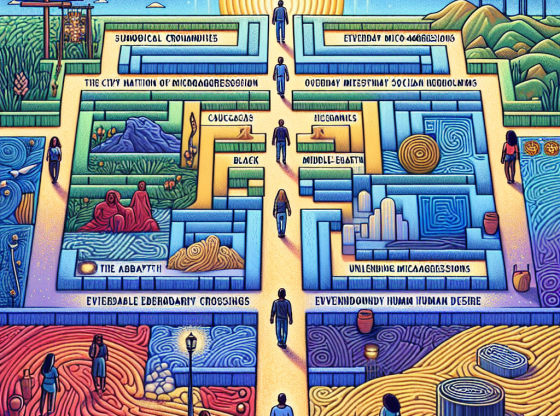
“Exploring the Allure of Boundaries: A Colorful Journey into Desire and Microaggressions” delves into the intricate interplay between personal desires and societal limitations. This exploration uncovers how boundaries shape our experiences, influencing both intimate relationships and broader social interactions. Through a vibrant lens, the narrative examines the nuances of desire—its fulfillment and frustration—while highlighting the often subtle yet impactful nature of microaggressions that permeate everyday life. By navigating these themes, the journey invites readers to reflect on their own boundaries, desires, and the unseen forces that challenge or reinforce them in a complex world.
The Psychology of Desire: Understanding Boundaries in Relationships
In the intricate dance of relationships, desire serves as both a guiding light and a complex enigma. It draws individuals together, igniting passions that can lead to profound connections or painful misunderstandings. Central to this exploration is the concept of boundaries—those invisible lines that define our comfort zones and dictate how we engage with others. Understanding these boundaries is crucial for nurturing healthy relationships and fully embracing the beauty of desire.
At its core, desire emerges from an innate yearning for connection. This craving can manifest in myriad forms, whether it be emotional intimacy, physical closeness, or intellectual stimulation. However, as enchanting as desire may be, it often coexists with the necessity of boundaries. These limits are not merely restrictions; rather, they serve as protective barriers that foster respect and understanding between partners. When individuals communicate their needs and establish clear boundaries, they create a safe space where desire can flourish without fear of encroachment or violation.
As we delve deeper into the psychology of desire, it becomes evident that boundaries can be fluid, shifting based on personal experiences and cultural contexts. For instance, what one person perceives as an acceptable expression of affection might feel overwhelming to another. This disparity highlights the importance of open dialogue within relationships. By discussing desires and limitations candidly, partners can navigate potential pitfalls and cultivate a more harmonious bond. Such conversations allow love to blossom while respecting individual autonomy, ultimately enriching the shared experience.
Moreover, the interplay between desire and boundaries can sometimes give rise to microaggressions—subtle, often unintentional actions or comments that convey dismissiveness or disrespect. These seemingly innocuous behaviors can chip away at the foundation of trust, leading to feelings of discomfort or alienation. Recognizing and addressing microaggressions is essential for maintaining healthy dynamics in any relationship. It requires a willingness to listen and reflect, ensuring that both partners feel valued and understood.
Transitional moments in relationships often reveal the delicate balance between desire and boundaries. For example, when two people embark on a romantic journey, the initial excitement can blur the lines between closeness and independence. In such instances, it is vital to remember that genuine desire thrives in an environment of mutual respect. By honoring each other’s boundaries, couples can deepen their connection while preserving their individuality—a beautiful paradox that enhances attraction.
Furthermore, understanding one’s own boundaries can significantly impact how desire is expressed and received. Self-awareness plays a critical role in recognizing what feels comfortable and what does not. This introspection allows individuals to articulate their needs clearly, paving the way for more fulfilling interactions. As partners learn to appreciate each other’s unique perspectives on desire and boundaries, they create a vibrant tapestry of emotional intimacy that transcends mere physical attraction.
Ultimately, exploring the allure of desire through the lens of boundaries enriches our understanding of human connection. It invites us to embrace vulnerability while fostering resilience, encouraging us to celebrate both the passion and the protection inherent in relationships. By cultivating awareness around our desires and respecting the boundaries of others, we unlock the potential for deeper love—one that honors individuality while intertwining lives in a colorful journey of shared dreams and aspirations.
Microaggressions in Everyday Life: Unpacking Subtle Discrimination

In the intricate tapestry of human interactions, microaggressions weave a subtle yet potent thread that often goes unnoticed. These seemingly innocuous remarks or actions can carry an undercurrent of discrimination, revealing layers of bias embedded in our everyday lives. As we embark on this exploration of microaggressions, it becomes essential to recognize how these moments—often dismissed as trivial—can profoundly impact individuals and communities alike.
Imagine a bustling café where laughter mingles with the aroma of freshly brewed coffee. A person walks in, their presence radiating uniqueness, yet they are met with an offhand comment about their appearance that echoes deeper societal stereotypes. Such instances may appear benign at first glance, but they serve as poignant reminders of the boundaries that society constructs around identity. The language we use, often unconsciously, reflects ingrained biases, shaping perceptions and experiences in ways that can be both alluring and alienating.
Transitioning from this vibrant setting, consider the workplace, another arena ripe for microaggressions. Here, the stakes are high, and the subtleties of communication can create an environment where some thrive while others struggle to find their footing. A colleague might compliment someone’s articulation by remarking, “You speak so well for someone from your background,” inadvertently reinforcing stereotypes tied to race or ethnicity. Such comments, veiled in praise, reveal an underlying narrative that diminishes the individuality of the recipient, casting them into a box defined by societal expectations rather than personal merit.
As we delve deeper into this journey, it is vital to acknowledge that microaggressions are not confined to any single context; they permeate various aspects of life, including education. In classrooms filled with potential, students from marginalized backgrounds may find themselves facing questions that imply doubt about their capabilities. When educators ask, “Are you sure you belong here?” the implications resonate far beyond the inquiry itself. This moment, laden with expectation and scrutiny, can stifle ambition and sow seeds of self-doubt, creating invisible barriers that hinder progress.
Furthermore, relationships—whether romantic, platonic, or professional—are not immune to the insidious nature of microaggressions. Consider a scenario where one partner casually dismisses the other’s feelings with a phrase like, “You’re being too sensitive.” While perhaps intended to soothe, such words can invalidate emotions and reinforce power dynamics within the relationship. In this delicate dance of affection and understanding, recognizing the weight of our words becomes paramount. Each interaction holds the potential to either bridge gaps or widen chasms, ultimately influencing the emotional landscape we navigate together.
In reflecting upon these examples, it becomes clear that microaggressions are not mere footnotes in conversations about discrimination; they are powerful indicators of societal attitudes and beliefs. By unpacking these subtle forms of bias, we cultivate awareness that empowers us to challenge norms and foster inclusivity. Thus, embracing the complexity of desire intertwined with vulnerability allows us to appreciate the beauty of human connection while remaining vigilant against the shadows cast by prejudice.
Ultimately, exploring the allure of boundaries invites us to confront the nuances of our interactions. Through empathy and understanding, we can transform microaggressions into opportunities for growth, weaving a more colorful narrative that celebrates diversity rather than constraining it. In this romantic endeavor of connection, let us strive to illuminate the paths toward acceptance and love, transcending the limitations imposed by subtle discrimination.
Color and Emotion: How Visuals Influence Perceptions of Desire
Color has an undeniable power to evoke emotions, shape perceptions, and influence desires. As we navigate the world around us, our experiences are often tinted by the hues that surround us. From the vibrant reds of passion to the serene blues of tranquility, colors play a pivotal role in framing our emotional landscapes. When it comes to desire, the interplay between color and emotion becomes particularly fascinating, as different shades can elicit specific feelings and reactions that are both conscious and subconscious.
Consider the warm embrace of red—a color frequently associated with love and desire. It is no coincidence that this fiery hue adorns countless romantic settings, from candlelit dinners to bouquets of roses. The psychological effects of red go beyond mere aesthetics; studies have shown that exposure to red can elevate heart rates and increase feelings of excitement. This physiological response aligns perfectly with the passionate undertones of desire, creating an atmosphere charged with intensity. In contrast, softer colors like pink may evoke tenderness and affection, suggesting a more nurturing form of desire that seeks connection rather than fervor.
As we explore the spectrum further, we encounter the calming influence of blue. Often linked to serenity and trust, blue can create a sense of stability that invites vulnerability. In the realm of desire, this tranquil color fosters an environment where individuals feel safe to express their innermost longings. The gentle allure of blue encourages open communication and intimacy, allowing relationships to flourish within a space of mutual understanding. Thus, while red ignites the flame of passion, blue nurtures the embers of emotional closeness.
Transitioning to more complex shades, we find ourselves amidst the stimulating vibrancy of yellow. This cheerful hue embodies optimism and joy, making it a compelling choice for those seeking to ignite playful desire. Yellow’s brightness can lift spirits and foster creativity, inviting individuals to explore new dimensions of attraction. However, it is essential to recognize that the nuances of color perception can vary significantly among cultures and individuals. While one person may associate yellow with happiness, another might perceive it as overwhelming or even anxiety-inducing. This variability highlights the intricate relationship between color, emotion, and personal experience.
Moreover, the subtleties of color extend beyond mere visual appeal; they intersect with social dynamics and cultural narratives. Microaggressions—those seemingly innocuous comments or actions that subtly convey prejudice—can also be influenced by color. For instance, the way certain colors are used in branding or marketing can perpetuate stereotypes and reinforce societal boundaries surrounding desire. These interactions remind us that our perceptions of color are not formed in isolation; rather, they are shaped by our environments, histories, and identities.
In this colorful journey into desire, it becomes evident that visuals profoundly impact how we connect with ourselves and others. As we immerse ourselves in these vibrant palettes, we must remain mindful of the emotions they invoke and the messages they convey. By embracing the complexity of color and its emotional resonance, we can better understand our desires and cultivate deeper connections. Ultimately, navigating the delicate dance between color and emotion opens doors to richer experiences, illuminating the paths that lead us toward authentic expression and genuine intimacy. In recognizing the allure of boundaries defined by color, we invite a more profound exploration of our desires, allowing them to flourish in all their vividness.
Navigating Personal Boundaries: Strategies for Healthy Interactions
Navigating personal boundaries is akin to embarking on a journey through a vibrant landscape, where each twist and turn unveils the delicate interplay between desire and self-protection. As we traverse this terrain, it becomes essential to understand that boundaries are not mere barriers; rather, they serve as the intricate brushstrokes of our emotional canvas, defining who we are while allowing others to glimpse our essence. In the realm of healthy interactions, recognizing and honoring these boundaries fosters deeper connections, enabling relationships to flourish in an atmosphere of mutual respect.
To begin this exploration, one must first cultivate self-awareness, a crucial element in understanding personal limits. By reflecting on our feelings and reactions in various situations, we can identify what makes us comfortable or uncomfortable. This introspection acts like a compass, guiding us toward clarity about our needs and desires. For instance, if a conversation with a friend begins to feel invasive, acknowledging that discomfort empowers us to articulate our boundary without fear. Through this process, we learn that expressing our needs is not an act of selfishness but rather an invitation for others to engage with us more authentically.
Once we have established a sense of self-awareness, effective communication emerges as the next vital strategy in navigating boundaries. Articulating our thoughts and feelings clearly can be compared to painting a vivid portrait of our inner world for others to appreciate. Using “I” statements—such as “I feel overwhelmed when…”—allows us to express ourselves without assigning blame, creating an open dialogue that invites understanding. Moreover, active listening plays a pivotal role in this exchange; by attentively hearing the perspectives of others, we foster an environment where vulnerability can thrive, paving the way for healthier interactions.
In addition to self-awareness and communication, setting clear expectations further enhances our ability to navigate boundaries gracefully. Just as a skilled dancer anticipates their partner’s movements, being upfront about our limits helps others understand how best to engage with us. Whether it involves discussing time commitments in friendships or outlining personal space preferences in romantic relationships, clarity serves as the foundation upon which trust is built. When both parties are aware of each other’s boundaries, the potential for misunderstandings diminishes significantly, allowing the relationship to blossom.
However, despite our best efforts, microaggressions may still infiltrate our interactions, often disguised as innocent remarks or well-meaning gestures. It is during these moments that resilience becomes paramount. Recognizing microaggressions requires a keen sensitivity to subtle nuances, much like discerning the soft hues of twilight against a fading sunset. When confronted with such challenges, responding assertively yet kindly can transform potentially harmful exchanges into opportunities for growth and education. By addressing these incidents directly, we not only advocate for ourselves but also contribute to a broader culture of awareness and empathy.
Ultimately, navigating personal boundaries is an ongoing dance—a blend of grace, courage, and authenticity. Each interaction offers a chance to redefine our limits while simultaneously enriching our relationships. Embracing this colorful journey allows us to honor our desires while respecting those of others, crafting a tapestry of connection that celebrates individuality and shared experience alike. In this harmonious balance lies the true allure of boundaries: a pathway leading us toward deeper intimacy and profound understanding in our interactions with the world around us.
Conclusion
Exploring the allure of boundaries reveals a complex interplay between desire and microaggressions, highlighting how personal and societal limits shape our experiences. This journey underscores the importance of recognizing and navigating these boundaries to foster deeper connections while remaining aware of the subtle ways in which desires can be complicated by microaggressions. Ultimately, it calls for a more nuanced understanding of human interactions, encouraging empathy and awareness in the pursuit of genuine relationships.