
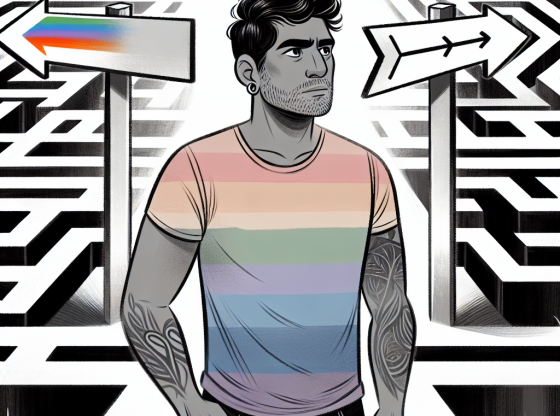
“Unveiling Desire: A Bisexual Man’s Journey Through Internalized Biphobia” is a compelling narrative that delves into the intricate and often tumultuous experience of a bisexual man grappling with internalized biphobia. This introspective journey sheds light on the pervasive societal stigmas and personal conflicts that shape his understanding of identity, love, and acceptance. Through candid reflections and poignant storytelling, the book explores the intersections of sexuality, mental health, and self-acceptance, offering readers a profound insight into the challenges and triumphs faced by those navigating the complexities of bisexuality in a world rife with prejudice and misunderstanding.
Overcoming Stigma: A Bisexual Man’s Battle with Internalized Biphobia
In the dimly lit corners of his mind, where shadows danced with uncertainty, Alex often found himself grappling with emotions that defied simple categorization. His heart, capable of profound love and affection for both men and women, was a testament to his bisexuality—a beautiful spectrum of desire and connection. Yet, amidst this vibrant landscape of attraction, there lurked a formidable adversary: internalized biphobia. This insidious stigma seeped into his consciousness, whispering doubts and fears that sought to undermine his sense of self.
Growing up in a world that frequently demanded clear-cut definitions, Alex struggled with the fluid nature of his desires. Society’s binary expectations left little room for the nuanced reality of his feelings. The pervasive myth that bisexuality was merely a phase or an indecisive state gnawed at him, planting seeds of doubt about his own legitimacy. Consequently, he often felt compelled to overcompensate—overemphasizing his attraction to one gender or the other—to fit more comfortably within the confines of societal norms.
As Alex navigated his romantic relationships, these internal conflicts sometimes manifested as insecurity and confusion. When dating women, he feared being perceived as not “man enough” or suspected of harboring hidden inclinations toward men. Conversely, while with men, he worried they might view him as less genuine or fully committed due to his attraction to women. These anxieties created an emotional tug-of-war, leaving him feeling isolated even when surrounded by love.
However, the turning point came when Alex encountered others who shared similar experiences. Through community support groups and friendships forged on mutual understanding, he began to unravel the tightly wound threads of internalized biphobia. Conversations with fellow bisexual individuals illuminated the commonality of their struggles and provided a safe space for vulnerability. It was within these connections that Alex found solace and strength, realizing that his identity was neither fragmented nor invalid but rather a harmonious blend of authentic attractions.
Moreover, educating himself about the rich history and contributions of bisexual figures in various fields instilled a newfound pride in his identity. He discovered stories of resilience and bravery from those who had walked the path before him, blazing trails and challenging stereotypes. These narratives served as beacons of hope, guiding Alex toward self-acceptance and empowerment.
Gradually, Alex learned to embrace his multifaceted nature without apology. He started engaging in open dialogues with his partners, fostering environments of trust and transparency. By sharing his journey and the complexities of his feelings, he dismantled walls of misunderstanding and built bridges of empathy. In doing so, he cultivated deeper, more meaningful connections that celebrated the entirety of his being.
Through introspection and external support, Alex transcended the shackles of internalized biphobia. He recognized that his capacity to love was not a source of ambiguity but a wellspring of richness and depth. Embracing his bisexuality allowed him to experience relationships with authenticity and passion, unburdened by the weight of societal judgments.
Alex’s journey is a poignant reminder that overcoming stigma begins with self-love and acceptance. By confronting and dispelling internalized biases, we pave the way for a future where every individual can revel in the beauty of their true selves. For Alex, unveiling desire was not merely an act of defiance against prejudice but a celebration of the boundless possibilities of love.
The Intersection of Identity and Desire: Navigating Bisexuality in a Heteronormative World
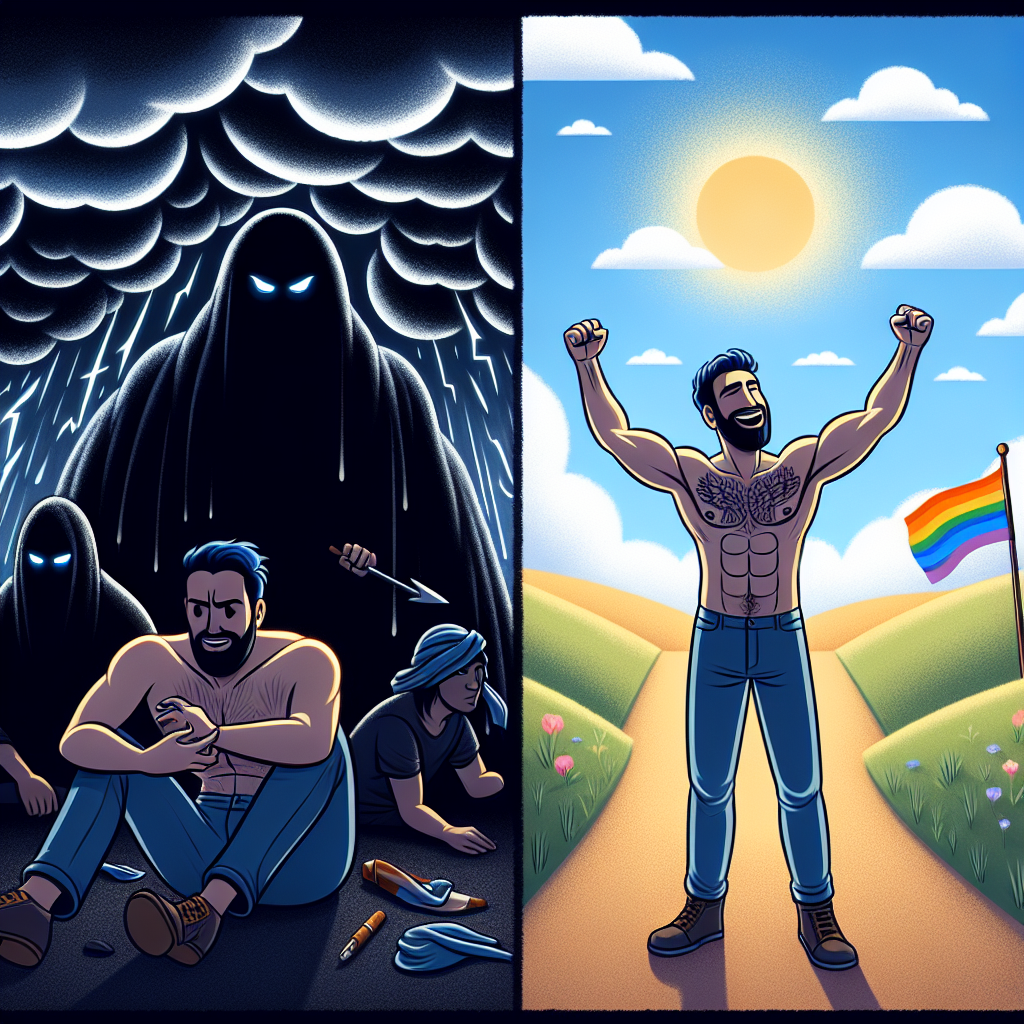
Navigating the intricate landscape of bisexuality in a heteronormative world often involves an emotional journey that is as complex as it is enlightening. For many bisexual men, including myself, this path is marked by internalized biphobia—a pervasive sense of self-doubt and conflict rooted in societal expectations and stereotypes. As I reflect on my own experiences, I realize that understanding and embracing my identity has been both a romantic exploration and a profound struggle.
From an early age, society’s rigid definitions of sexuality began to shape my perceptions of desire. Growing up, I was surrounded by a culture that largely acknowledged only two possibilities: heterosexuality or homosexuality. This binary framework left little room for the fluidity and nuance that define bisexuality. Consequently, I found myself questioning whether my attractions were valid or if they were merely a phase. The absence of visible bisexual role models only intensified these doubts, creating a chasm between who I felt I was and who I thought I should be.
As I moved through adolescence and into adulthood, the weight of internalized biphobia became more palpable. Despite developing romantic feelings for individuals of multiple genders, I struggled to articulate my desires even to myself. There was an insidious voice inside me, echoing society’s skepticism, whispering that being attracted to more than one gender made me indecisive or untrustworthy. These internal conflicts often led to periods of denial, where I would convince myself that choosing one side of the spectrum might simplify my life and make me more acceptable to others.
However, love and desire have a way of defying simplistic categorization. My relationships with both women and men illuminated different facets of my identity, allowing me to experience the full spectrum of human connection. Each relationship brought its own set of joys and challenges, teaching me that my capacity for love was not confined by gender but rather enriched by diversity. Slowly, I began to dismantle the walls of internalized biphobia, brick by brick, as I realized that my desires were neither contradictory nor invalid.
Yet, navigating bisexuality in a heteronormative world also meant confronting external prejudices. Bisexual erasure—the tendency to invalidate or ignore bisexual identities—was a frequent occurrence. Whether it was straight friends assuming I was gay or gay acquaintances dismissing my attraction to women as mere experimentation, these microaggressions perpetuated feelings of invisibility. Over time, however, I learned to assert my identity with confidence, recognizing that visibility was crucial not just for my own well-being but also for challenging societal norms.
In moments of introspection, I often ponder how different my journey might have been had I grown up in a world that celebrated rather than stigmatized bisexuality. Nonetheless, I am grateful for the resilience and self-awareness that emerged from navigating this complex terrain. Embracing my bisexuality has ultimately been an act of radical self-love, allowing me to forge deeper connections with others and, most importantly, with myself.
In conclusion, the intersection of identity and desire is a delicate dance, especially within the confines of a heteronormative society. For bisexual men like myself, overcoming internalized biphobia requires not only personal courage but also a broader cultural shift towards acceptance and inclusivity. By sharing our stories and affirming our identities, we can pave the way for future generations to navigate their journeys with greater ease and authenticity.
Breaking Free: Personal Stories of Conquering Internalized Biphobia
In the dimly lit corners of his mind, Alex often found himself grappling with a tempest that seemed to have no end. Growing up in a world where love was frequently defined by binary boundaries, he felt an unrelenting pressure to fit into a mold that never quite suited him. His heart, however, beat to a different rhythm, one that embraced both men and women. The journey to accepting this duality within himself was neither straightforward nor simple; it was fraught with moments of doubt, fear, and internalized biphobia.
Alex’s early years were marked by a burgeoning awareness of his attraction to both genders, yet societal expectations cast long shadows over his self-discovery. He would find himself deeply enamored with the girl next door, only to later experience an equally profound connection with his male best friend. This fluidity felt natural to him, but external voices—those of family, friends, and media—often told a different story. They suggested that he was confused, indecisive, or merely going through a phase. These insinuations planted seeds of doubt in his young mind, leading him to question the legitimacy of his feelings.
As he entered adulthood, Alex began to date women exclusively, believing it might simplify his life. He convinced himself that these relationships were enough, even as he felt an inexplicable void. Yet, whenever he encountered a man who stirred something deep within him, the same old fears resurfaced. Was he betraying his partner? Was he being true to himself? These questions gnawed at him incessantly, creating a chasm between who he was and who he pretended to be.
It wasn’t until Alex met Sam, a fellow bisexual man, that he began to unravel the complexities of his emotions. Their friendship blossomed into a romance that defied the constraints Alex had previously placed on his heart. With Sam, he discovered a safe space to explore his desires without judgment. Conversations about their shared experiences revealed the insidious nature of internalized biphobia, a silent thief that steals joy and authenticity from those it afflicts. Together, they navigated the labyrinth of societal expectations and personal insecurities, finding solace in each other’s understanding.
Through his relationship with Sam, Alex learned the importance of self-acceptance and the power of vulnerability. He realized that his attractions were not a sign of confusion but a testament to the depth and breadth of human desire. Embracing his bisexuality allowed him to live more authentically, free from the shackles of societal norms. The process was gradual and required immense courage, but with each step, he shed layers of internalized shame and replaced them with pride and self-love.
Reflecting on his journey, Alex understood that breaking free from internalized biphobia is not a destination but a continuous process. It involves challenging ingrained beliefs, seeking supportive communities, and celebrating one’s unique identity. His story is a testament to the resilience of the human spirit and the transformative power of love—in all its forms. By sharing his experiences, Alex hopes to inspire others facing similar struggles to embrace their truth and recognize that they are deserving of love and acceptance, just as they are.
In unveiling his desires and confronting his fears, Alex has embarked on a path toward genuine happiness—a journey that redefines love beyond binaries and celebrates the beautiful spectrum of human connection.
Embracing Authenticity: A Journey Towards Self-Acceptance as a Bisexual Man
Unveiling Desire: A Bisexual Man’s Journey Through Internalized Biphobia
The journey towards self-acceptance as a bisexual man is often fraught with complexities, colored by internal struggles and societal pressures. From the outset, the duality of attraction can be both exhilarating and bewildering. It begins with an inkling, a subtle awareness that one’s heart does not adhere to conventional boundaries. This realization can stir a tempest of emotions, ranging from elation to confusion. As one grapples with these newfound feelings, the shadow of internalized biphobia looms large, casting doubt on the legitimacy of one’s desires.
In navigating this intricate landscape, the influence of societal norms cannot be overstated. The pervasive narrative that love must fit within binary confines often leaves little room for those who defy such categorization. Consequently, many bisexual men find themselves ensnared in a web of self-doubt, questioning whether their attractions are valid or merely a phase. This internal conflict is exacerbated by the lack of representation and understanding within both heterosexual and LGBTQ+ communities. Bisexuality is frequently dismissed or misunderstood, leading to feelings of isolation and invisibility.
Yet, amid this turmoil, there exists a profound yearning for authenticity. The path to self-acceptance demands courage and introspection, urging one to confront deeply ingrained biases and fears. It is a gradual process, akin to peeling away layers of armor that have long shielded the heart from vulnerability. Each step forward is marked by moments of revelation, where the beauty of one’s multifaceted desires becomes increasingly apparent. These epiphanies serve as beacons of hope, illuminating the way towards a more authentic existence.
As one delves deeper into this journey, the importance of community and connection emerges as a vital lifeline. Finding solace in the shared experiences of others can be transformative, offering validation and support. Online forums, support groups, and friendships forged through mutual understanding become sanctuaries where one can freely express their truth. In these spaces, the weight of internalized biphobia begins to lift, replaced by a sense of belonging and acceptance.
Moreover, embracing one’s bisexuality involves redefining personal narratives and challenging societal constructs. It requires rejecting the notion that love must conform to rigid binaries and instead celebrating the fluidity of human desire. By doing so, one reclaims agency over their identity, allowing it to flourish without constraint. This reclamation is a radical act of self-love, an affirmation that one’s worth is not contingent upon fitting into predefined molds.
Throughout this odyssey, moments of romantic connection hold particular significance. They serve as tangible reminders of the validity and depth of one’s attractions. Whether it be the gentle brush of hands or the shared laughter under a starlit sky, these instances of intimacy reinforce the beauty of bisexual love. They stand as testaments to the richness of human experience, transcending societal judgments and stereotypes.
Ultimately, the journey towards self-acceptance as a bisexual man is an ongoing process, marked by continuous growth and discovery. It is a testament to the resilience of the human spirit and the enduring quest for authenticity. By embracing one’s true self and dismantling the barriers imposed by internalized biphobia, a world of boundless possibilities unfolds. In this newfound freedom, love flourishes in all its forms, unrestrained and unapologetically diverse.
Conclusion
“Unveiling Desire: A Bisexual Man’s Journey Through Internalized Biphobia” provides a poignant and insightful exploration of the struggles faced by bisexual men in confronting and overcoming internalized biphobia. The narrative delves into the complexities of bisexual identity, societal pressures, and the personal growth that comes from self-acceptance. It highlights the importance of understanding and addressing internalized prejudices to achieve a more authentic and fulfilling life. Through candid storytelling and reflection, the book underscores the resilience required to navigate and dismantle the stigma surrounding bisexuality, ultimately advocating for greater awareness and inclusivity within both the LGBTQ+ community and society at large.