
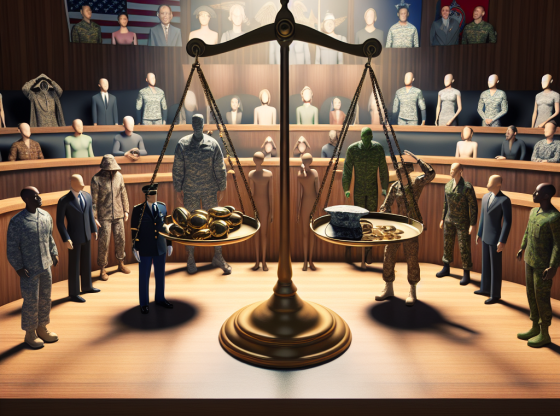
“Unveiling DADT: A Dive into the Ethics of Don’t Ask, Don’t Tell” delves into one of the most controversial policies in U.S. military history. Instituted in 1993 and repealed in 2011, “Don’t Ask, Don’t Tell” (DADT) was intended as a compromise to allow gay, lesbian, and bisexual individuals to serve in the military without openly acknowledging their sexual orientation. However, this policy also mandated that military personnel could not be asked about their sexuality nor could they disclose it. This introduction explores the ethical implications of DADT, examining its impact on service members’ rights, the moral dilemmas it presented, and its broader consequences for military culture and society. Through an in-depth analysis, the discussion aims to uncover the complexities and lasting effects of a policy that sought to navigate the intersection of personal identity and professional duty.
Historical Context: Understanding the Origins of Don’t Ask, Don’t Tell
In the soft glow of history’s lantern, the tale of “Don’t Ask, Don’t Tell” (DADT) emerges as a poignant chapter in America’s ongoing quest for equality and justice. To truly appreciate its origins, one must first journey back to a time when whispers of love were often shrouded in secrecy and fear. The early 1990s were an era marked by both progress and resistance; society was beginning to grapple with the burgeoning visibility of LGBTQ+ individuals even as it clung to old prejudices.
The roots of DADT can be traced to the cultural landscape of the United States during World War II. As men and women from all walks of life joined the military effort, the presence of gay and lesbian soldiers became more pronounced. However, these brave souls often had to conceal their true selves, for the prevailing attitudes deemed homosexuality incompatible with military service. This clandestine existence continued unabated through subsequent conflicts, shaping a culture of silence and repression within the armed forces.
Transitioning into the late 20th century, the winds of change began to stir. The Civil Rights Movement had paved the way for broader discussions about human rights, and the Stonewall Riots of 1969 had ignited a spark of activism within the LGBTQ+ community. By the time Bill Clinton assumed the presidency in 1993, there was a growing chorus calling for the acceptance of openly gay service members. Yet, this period was also rife with contention, as many Americans still harbored deep-seated biases against homosexuality.
It was within this crucible of conflict that DADT was conceived. President Clinton sought a compromise between those advocating for inclusion and those resistant to change. Thus, on December 21, 1993, DADT was signed into law, stipulating that military personnel would not be asked about their sexual orientation, nor should they disclose it. At first glance, this policy seemed a step toward progress—a delicate balance between tradition and modernity. However, beneath its ostensibly neutral veneer lay a labyrinth of ethical dilemmas.
To understand the ethical implications of DADT, one must consider the lives it affected. For countless service members, the policy meant living in constant fear of discovery and discharge. Love letters went unwritten, photographs remained hidden, and words of affection were swallowed back into silence. In essence, DADT perpetuated a cycle of invisibility and shame, forcing individuals to choose between serving their country and embracing their identity.
Moreover, the policy fostered an environment where discrimination could thrive unchecked. Despite its intention to protect privacy, DADT did little to shield LGBTQ+ soldiers from harassment or violence. Instead, it reinforced the notion that their love was something aberrant—unworthy of acknowledgment or respect. This institutionalized erasure not only undermined morale but also tarnished the very ideals of liberty and justice that the military swore to uphold.
As the years passed, the cracks in DADT’s facade grew increasingly apparent. Advocacy groups tirelessly campaigned for its repeal, citing both moral and practical arguments. Their efforts culminated in a historic moment on September 20, 2011, when DADT was officially repealed, allowing gay and lesbian service members to serve openly at last. This victory was not merely a legislative triumph but a testament to the enduring power of love and truth.
Reflecting upon the historical context of DADT invites us to ponder the complexities of societal change. It reminds us that progress is often born from struggle and that the path to justice is rarely straightforward. Yet, amidst this tapestry of challenges and triumphs, one thing remains clear: the human spirit’s yearning for authenticity cannot be silenced indefinitely. Through the lens of history, we see that love, in all its forms, will ultimately find a way to shine through the shadows.
Ethical Implications: The Moral Dilemmas Surrounding DADT

The ethical implications of the now-defunct “Don’t Ask, Don’t Tell” (DADT) policy present a labyrinthine moral landscape that begs for exploration. Enacted in 1993 and repealed in 2011, DADT was ostensibly designed to allow LGBTQ+ individuals to serve in the military without facing direct discrimination, provided they did not disclose their sexual orientation. However, beneath this veneer of tolerance lay a multitude of moral dilemmas that invite us to question the very essence of fairness, equality, and human dignity.
To begin with, DADT inherently demanded silence from those who identified as LGBTQ+, effectively coercing them into living a double life. This enforced secrecy is not merely an inconvenience; it represents a profound violation of personal integrity. The act of concealing one’s true self can have devastating psychological consequences, including anxiety, depression, and a diminished sense of self-worth. Moreover, it places undue emotional strain on service members, compelling them to navigate the perilous waters of deceit and pretense while performing their duties under already stressful conditions.
Transitioning from the individual level to the institutional framework, DADT perpetuated a culture of exclusion within the military. By implicitly suggesting that LGBTQ+ identities were incompatible with military service, the policy endorsed a form of institutionalized homophobia. It reinforced harmful stereotypes and tacitly encouraged discriminatory behavior among peers. In such an environment, camaraderie and mutual trust—cornerstones of military cohesion—were inevitably compromised. How can a unit function optimally when some of its members are forced to hide fundamental aspects of their identity?
Furthermore, DADT’s ethical shortcomings extend beyond the immediate sphere of military service. On a societal level, the policy sent a troubling message about the value placed on LGBTQ+ lives. When a government institution adopts a stance that marginalizes certain groups, it legitimizes similar attitudes in broader society. Thus, DADT contributed to the stigmatization of LGBTQ+ individuals far beyond the barracks and battlefields, affecting how they were perceived and treated in civilian life.
Yet another layer of ethical complexity arises when we consider the principle of justice. The notion that all citizens should have equal opportunities and protections under the law is a cornerstone of democratic societies. DADT flagrantly violated this principle by imposing unique restrictions on LGBTQ+ individuals solely based on their sexual orientation. This discrepancy raises poignant questions about the nature of justice and equality. Can a society truly claim to uphold these values if it systematically disenfranchises a segment of its population?
Moreover, the repeal of DADT did not instantly rectify the injustices it engendered. The scars left by years of enforced silence and discrimination linger, necessitating ongoing efforts to heal and rebuild trust. Acknowledging past wrongs is only the first step; active measures must be taken to ensure that similar policies do not resurface under different guises.
In conclusion, the ethical implications of DADT are manifold and deeply interwoven with broader questions about human rights, social justice, and the role of institutions in shaping societal norms. The policy may have been repealed, but its legacy serves as a poignant reminder of the importance of vigilance in safeguarding the dignity and equality of all individuals. As we reflect on this chapter in history, we are called to reaffirm our commitment to creating a world where no one has to choose between serving their country and being true to themselves.
Psychological Impact: How DADT Affected LGBTQ+ Service Members
The policy known as Don’t Ask, Don’t Tell (DADT) cast a long shadow over the lives of LGBTQ+ service members in the United States military. Enacted in 1993 and repealed in 2011, this policy prohibited military personnel from discriminating against or harassing closeted homosexual or bisexual service members while barring openly gay, lesbian, or bisexual individuals from serving. The psychological impact on those who served under DADT is profound and multifaceted, weaving a tapestry of emotions that range from fear and isolation to resilience and hope.
For many LGBTQ+ service members, the introduction of DADT was a double-edged sword. On one hand, it allowed them to serve without the immediate threat of discharge solely based on their sexual orientation. However, this came at the steep price of enforced secrecy. Living under such constraints meant constantly guarding one’s identity, an exhausting endeavor that took a significant toll on mental health. The strain of leading a double life led to heightened levels of anxiety and depression among these service members, compounded by the perpetual fear of being outed and subsequently discharged.
Transitioning from the general atmosphere of fear, we delve into the more personal realms of isolation and loneliness. Under DADT, forming close bonds with fellow service members became fraught with risk. Trust, an essential component of camaraderie and unit cohesion, was undermined by the necessity to conceal one’s true self. This lack of authentic connection often resulted in feelings of profound isolation. For many, the military—an institution built on unity and brotherhood—became a paradoxical landscape where they felt perpetually alone despite being surrounded by comrades.
In addition to isolation, the constant need for vigilance created a pervasive sense of paranoia. Every interaction had to be carefully navigated; every word meticulously chosen. Simple acts that heterosexual counterparts might take for granted—such as talking about loved ones or sharing personal stories—were laden with potential peril. The mental gymnastics required to maintain this facade drained emotional reserves, leaving little room for genuine happiness or peace.
Yet amid the shadows cast by DADT, there were glimmers of remarkable resilience and strength. Many LGBTQ+ service members found solace in clandestine support networks, communities bound not just by shared experiences but by a mutual understanding of what it means to serve in silence. These covert alliances provided emotional sustenance and reinforced a sense of belonging that transcended the oppressive framework of DADT.
Moreover, the eventual repeal of DADT marked a pivotal moment of catharsis for countless individuals. The lifting of this policy was not merely a legislative change; it symbolized a broader societal shift towards acceptance and equality. For those who had endured years of suppression, the repeal offered a chance to reclaim their identities fully and openly. This newfound freedom infused their lives with a sense of validation and hope, transforming previously hidden scars into badges of honor.
Reflecting on the psychological impact of DADT reveals a complex interplay of suffering and strength. While the policy inflicted considerable harm on LGBTQ+ service members, it also illuminated their incredible capacity for endurance and solidarity. In the final analysis, the legacy of DADT serves as both a cautionary tale and a testament to the indomitable spirit of those who lived through it. Their stories remind us that even in the face of systemic oppression, love and authenticity can prevail, casting light into the darkest corners of human experience.
Policy Repeal: The Road to Ending Don’t Ask, Don’t Tell and Its Aftermath
The repeal of the “Don’t Ask, Don’t Tell” (DADT) policy in 2011 marked a significant turning point in the journey toward equality and acceptance within the U.S. military. This policy, instituted in 1993 under President Bill Clinton, was initially seen as a compromise solution to allow gay, lesbian, and bisexual individuals to serve in the armed forces without fear of discharge due to their sexual orientation. However, it soon became apparent that DADT perpetuated an environment of secrecy, discrimination, and psychological distress for many service members.
As the years passed, the voices calling for change grew louder and more insistent. The road to repealing DADT was paved with heartfelt testimonies from veterans and active-duty personnel who bravely shared their experiences. Their stories were poignant reminders of the sacrifices made not just on the battlefield but also in the quiet struggles of personal identity. These narratives illuminated the deep-seated need for authenticity and integrity within the ranks, as well as the detrimental effects of enforced silence.
Advocacy groups played a crucial role in this movement, tirelessly campaigning for justice and equality. Organizations like the Human Rights Campaign and Servicemembers Legal Defense Network provided platforms for these voices to be heard, amplifying the message that every individual deserves the right to serve openly and honorably. Politicians and military leaders alike began to acknowledge the moral imperative of ending this discriminatory policy, culminating in a groundswell of support for its repeal.
In December 2010, the U.S. Senate voted to repeal DADT, followed by President Barack Obama signing the repeal into law. This historic moment was met with celebration and relief among LGBTQ+ service members and their allies. It symbolized not only a victory for civil rights but also a step towards a more inclusive and cohesive military force. The aftermath of this decision saw a gradual yet profound transformation within the armed services.
Transitioning from a culture of concealment to one of openness required concerted efforts at all levels. Training programs were implemented to educate service members about diversity and inclusion, fostering a climate of respect and understanding. Commanders and leaders were tasked with ensuring that the integration process was smooth and devoid of prejudice. This period of adjustment highlighted the resilience and adaptability of the military community, as they embraced change with professionalism and dignity.
Moreover, the repeal of DADT had ripple effects beyond the military. It served as a beacon of hope for broader societal acceptance, inspiring other institutions to reevaluate their own policies regarding LGBTQ+ individuals. The courage displayed by those who fought against DADT resonated far and wide, reinforcing the idea that love and truth are powerful catalysts for progress.
While challenges remained, including instances of residual bias and discrimination, the overall trajectory was one of positive growth. The legacy of DADT’s repeal is a testament to the enduring spirit of those who believe in justice and equality. It reminds us that even in the face of adversity, change is possible when driven by compassion and conviction.
In reflecting upon the end of DADT, we are reminded of the timeless values that underpin our society: freedom, dignity, and respect for all. The path to its repeal was not easy, but it was necessary—a vital chapter in the ongoing story of human rights. Through this lens, we see that the fight for equality is both an individual and collective endeavor, one that continues to shape our world for the better.
Conclusion
“Unveiling DADT: A Dive into the Ethics of Don’t Ask, Don’t Tell” concludes that the policy was fundamentally flawed from an ethical standpoint. It compromised the integrity and dignity of LGBTQ+ service members by forcing them to conceal their identities, thereby perpetuating discrimination and inequality within the military. The analysis underscores the importance of inclusive policies that respect individual rights and promote a culture of acceptance and fairness.